Morocco takes speeding seriously. Fixed cameras line the highways, mobile radar units hide near speed limit transitions, and police checkpoints appear where tourists least expect them. The good news? Fines start at just 150-300 MAD (15-30€) and the system is consistent. Follow the limits, and you'll never pay a dirham in penalties.
Here's what you need to know about speed enforcement around Agadir, where cameras typically sit, and how to drive without collecting tickets.
Table of Contents
Speed Limits You Need to Know
Moroccan speed limits follow a simple structure, but the transitions catch tourists constantly.
Urban areas: 40-60 km/h depending on signage
National roads (outside towns): 80-100 km/h
Highways (autoroutes): 120 km/h
The problem isn't the limits themselves. It's how quickly they change. You'll be cruising at 100 km/h on the N1 toward Marrakech, then suddenly see signs dropping to 80, then 60, then 40 within a few hundred meters as you approach a village. The police know exactly where tourists struggle to slow down in time.
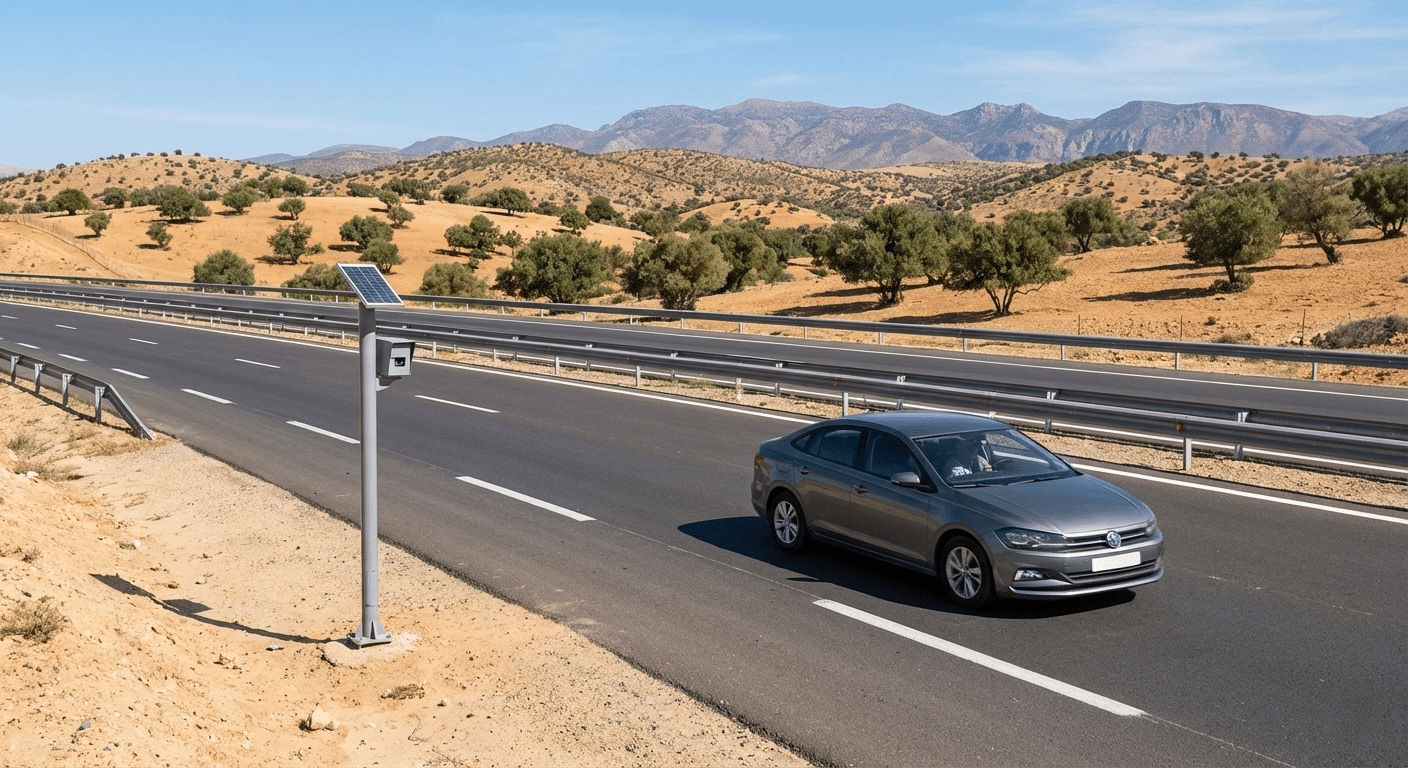
Morocco introduced new bidirectional speed cameras in 2025, capturing vehicles in both directions simultaneously. These eliminate the blind spots older cameras had, so the "they only catch one direction" trick no longer works.
Where Speed Cameras Hide Near Agadir
Fixed speed cameras cluster around predictable locations in the Souss-Massa region:
N1 Highway toward Marrakech
Multiple fixed cameras along this route, particularly near Taroudant turnoff and approaching Chichaoua. The cameras sit where speed limits drop from 100 to 80 or 80 to 60.
N8 toward Essaouira
Cameras positioned at village approaches between Agadir and Essaouira. Watch specifically for the speed reductions entering and exiting small towns along this coastal route.
N10 toward Tiznit
Fixed cameras near Inezgane and along the stretch south of the city. Speed limit drops are abrupt here, often changing from 100 to 60 with minimal warning.
Agadir city approaches
Cameras monitor the main entrances to the city, particularly coming from the airport on the N1 and the coastal road from Taghazout.
Toll road exits
Leaving any toll booth, expect cameras within 500 meters. The speed drops dramatically from 120 to 60 or even 40 right after paying. Many tourists get caught here because they accelerate too soon after the booth.
Common Speed Trap Locations
Beyond fixed cameras, mobile radar units and police checkpoints populate specific areas:
Roundabouts and intersections
Police frequently position mobile radars near roundabouts where speed limits drop. The entrance roads to Agadir from multiple directions have these setups, particularly near shopping areas and the beach road.
Village transitions
Any time the road passes through a village, expect a speed drop to 40 km/h. Police often sit just inside these zones, catching drivers still traveling at the previous limit.
Toll booth exits
Classic location. You pay your toll, think you're back on the highway, and accelerate. The speed camera or police checkpoint waits 200 meters later where the limit is still 60 km/h.
Downhill sections
The stretch between Agadir and Taghazout has several areas where the road descends and speed naturally increases. Cameras and police know this and position accordingly.
After long straight stretches
Long, empty sections of road lull drivers into higher speeds. Cameras sit at the end of these stretches, right where limits drop.
Fine Structure and What You'll Pay
Moroccan speeding fines follow a tiered system based on how far over the limit you were traveling:
Up to 20 km/h over the limit: 150-300 MAD (15-30€)
20-30 km/h over the limit: 500 MAD (50€)
More than 30 km/h over the limit: 700 MAD (70€) plus possible vehicle confiscation
Running a red light: 700 MAD (70€)
Seatbelt violations: 150-300 MAD per passenger (15-30€)
Mobile phone use while driving: 150-400 MAD (15-40€)
Fines are payable on the spot in cash. Police carry receipt books and the process is straightforward. They'll show you the radar reading, write the ticket, and collect payment. The whole interaction takes 5-10 minutes.
For fixed camera violations, the fine goes to the rental company who will charge your card on file. This is why rental contracts include clauses about traffic violations.
How to Avoid Fines
Staying ticket-free in Morocco requires attention more than luck.
Use Waze or Google Maps
Both apps show speed camera locations and user-reported police positions. Waze particularly excels at crowd-sourced checkpoint alerts. Moroccan drivers actively report police positions, and you'll see warnings pop up as you approach.
Stay 5-10 km/h under posted limits
This buffer accounts for speedometer variations and gives you reaction time when limits suddenly drop. Yes, you'll have locals passing you constantly. Let them. They know where every camera sits; you don't.
Watch for warning signs
Moroccan roads post "Radar" warning signs before many fixed cameras. These signs look like a camera icon or simply say "Contrôle Radar." Pay attention and slow down when you see them.
Anticipate speed drops
Approaching any village, town, roundabout, or toll area? Start slowing early. The limits will drop, and cameras or police will be waiting at the transition point.
Watch other drivers
When local drivers suddenly slow down for no apparent reason, follow their lead. They're either warning you about something ahead or responding to it themselves. Flashing headlights from oncoming traffic often signals a speed check or police checkpoint ahead.
Keep cash available
If you do get stopped, having cash for the fine keeps the interaction simple and quick. Exact change isn't necessary, but small bills help.
What Happens If You Get Stopped
Getting pulled over in Morocco is less stressful than most tourists expect.
The process:
The police officer will wave you to the side of the road. Pull over safely and completely. Stay in your car unless asked to exit. Have your license, passport, and rental documents ready.
The officer will explain why you were stopped, often showing the radar reading for speeding violations. They'll write a ticket with the fine amount and collect payment in cash. You'll receive a receipt.
What to expect:
Moroccan police are generally professional and polite with tourists. The interaction is transactional, not confrontational. They're not looking to ruin your trip; they're enforcing traffic law.
Don't argue about whether you were actually speeding. Don't try to negotiate the fine down. Don't offer anything beyond the official fine amount. Just pay, take your receipt, and continue your journey.
Language:
Many officers speak basic French and some English, particularly in tourist areas around Agadir. If communication is difficult, they'll show you the radar reading and the fine amount on paper.
Documents needed:
Your driving license (international permit helpful but not required for most nationalities), passport or ID, and the vehicle rental documents. Keep these accessible, not buried in luggage.
FAQ
Are speed camera locations marked in Morocco?
Many fixed cameras have warning signs posted before them, either camera icons or "Contrôle Radar" text. However, not all cameras are marked, and mobile units never are. Using Waze provides more reliable warnings than roadside signs.
Can I pay speeding fines with a card?
No. On-the-spot fines require cash payment in Moroccan dirhams. Police do not accept cards, euros, or dollars for fine payment. Always carry cash when driving.
What if I can't pay the fine immediately?
The officer may hold your documents and direct you to a local police station or court to pay. This creates significant delays. Carrying cash avoids this situation entirely.
Do rental cars have speed camera warnings built in?
Some newer vehicles have GPS systems with camera alerts, but don't rely on this. Use your phone with Waze or Google Maps for more current information. The apps update faster than built-in systems.
Will I get fined for a camera violation after returning my rental?
Yes. Fixed camera fines are mailed to the vehicle registration address, which is the rental company. They'll charge the fine plus an administrative fee to the card on file from your rental agreement.
Planning a road trip from Agadir? Check our complete car rental guide for everything you need to know about driving in the region.
Questions about routes or driving conditions? WhatsApp us. We know these roads and can advise on what to expect.